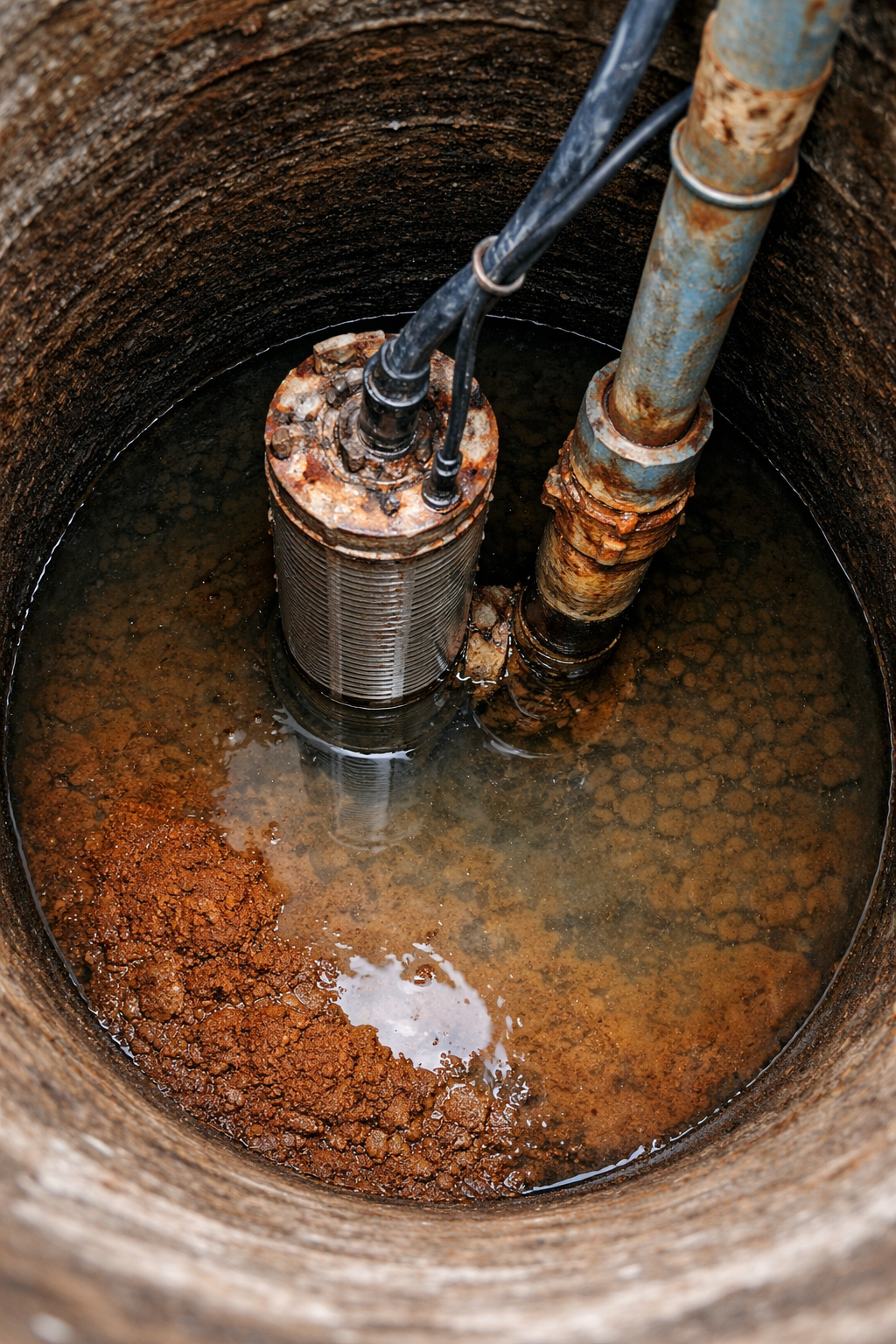
Low Producing Well — Service Summary
A low producing well is not always a failed well. In many cases, the issue is the result of changing conditions within the well or the surrounding aquifer system. Proper diagnosis is critical before determining whether rehabilitation, system modification, or full replacement is the correct path forward.
Common Causes of Low Well Production
Low production can develop gradually or appear suddenly depending on a range of factors. The most common causes include:
Seasonal and Annual Fluctuations
Groundwater levels naturally rise and fall throughout the year. Dry seasons or extended drought conditions can significantly reduce available water in the aquifer.
Mineral Buildup in the Screen Zone
Iron, manganese, calcium, and other mineral deposits can accumulate along the well screen or open intervals, restricting water flow into the well.
Sediment Accumulation in the Well
Over time, fine sediment can settle within the well column, reducing usable depth and interfering with pump performance.
Extended Dry Years and Aquifer Depletion
Multi-year dry cycles can lower static water levels, reducing recovery rates and total production capacity.
Pump Deterioration and System Inefficiencies
A worn or improperly sized pump may struggle to keep up with demand, masking the true output potential of the well.
Diagnostic Approach
Before any corrective action is taken, Total Wells Pumps and Filtration completes a structured diagnostic process to understand the condition of the well.
Downhole Camera Inspection
A submersible camera is used to visually inspect the well interior. This allows for direct evaluation of:
mineral buildup
screen condition
sediment levels
structural integrity
System Evaluation
The pump, motor, and associated components are evaluated to determine whether performance issues are mechanical, electrical, or related to the well itself.
From this data, a targeted plan is developed based on actual conditions—not assumptions.
Rehabilitation and Restoration Solutions
Depending on findings, several restoration methods may be used to improve well performance.
Well Bailing and Debris Removal
Sediment and debris can be physically removed from the bottom of the well to restore usable depth and improve flow conditions.
Chemical Well Rehabilitation
Specialized chemical treatments are introduced to break down mineral buildup within the screen zone and surrounding formation.
This process may include:
chemical application specific to the type of buildup (iron, scale, biofouling)
mechanical agitation to dislodge deposits
circulation of treatment through the well structure
controlled purging to remove loosened material from the system
Component Replacement and System Correction
If internal system components are contributing to the issue, replacement or adjustment may include:
pump replacement or resizing
drop pipe and motor wire replacement
correction of intake depth or system configuration
Verification and Performance Testing
All work is completed with validation to confirm actual improvement.
Post-Rehabilitation Camera Inspection
A second camera run verifies that buildup has been removed and that the well is in improved condition.
Pump and Flow Testing
A controlled pump test is performed to determine:
actual production rate
recovery rate
system sustainability under load
This establishes a clear baseline for what the well can reliably produce moving forward.
Outcome
The objective is not simply to restore water temporarily, but to:
maximize the usable output of the existing well
improve long-term reliability
provide a clear understanding of system limitations
If rehabilitation is not sufficient, the diagnostic data provides a solid foundation for the next step—whether that is system modification, storage integration, or new well development.
Conclusion
Low producing wells require a technical, measured approach. Total Wells Pumps and Filtration applies a combination of visual inspection, mechanical service, and targeted rehabilitation methods to restore performance wherever possible, while ensuring that any recommendations are grounded in real-world data and long-term system viability.